Epoxy Garage Floors Built for Southern Utah's Desert Heat
Epoxy floor coating is the most widely installed garage floor system in St. George — and when done right, it holds up exceptionally well in Washington County's demanding climate. A properly applied epoxy creates a hard, seamless surface bonded directly to your concrete slab, resistant to oil drips, chemical spills, and the red rock dust abrasion that makes bare concrete in this environment deteriorate quickly.
The primary threat to unprotected concrete in St. George isn't cold weather — it's UV radiation and heat. With over 300 sunny days per year and summer UV index readings that regularly hit 10 or 11, bare garage slabs in Southern Utah oxidize, dust, and pit faster than nearly anywhere else in the state. Slab surface temperatures can push past 130°F in July, driving thermal stress that widens existing cracks and enlarges pores. A professionally installed epoxy system seals the slab against UV degradation, chemical attack, and the monsoon moisture that pushes upward through high-desert slabs during St. George's July–August rainy season.
The UV Problem: Why Topcoat Selection Is Critical in St. George
Standard aromatic epoxy — used in most DIY kits and low-cost installations — is not UV stable. In Southern Utah's intense sun, an aromatic topcoat will visibly amber, yellow, or chalk within one to two seasons. This isn't just an aesthetic issue; surface breakdown from UV oxidation accelerates wear and shortens the coating's functional life significantly.
The solution is an aliphatic polyaspartic or polyurethane topcoat over the epoxy base. Aliphatic chemistry resists UV degradation entirely — the coating won't yellow or chalk regardless of sun exposure. In St. George's climate, this isn't optional. Every epoxy system we install includes UV-stable topcoat protection as a baseline requirement, not an upgrade.
Timing also matters in St. George in a way that's the opposite of colder markets. Epoxy can't be applied to concrete above roughly 90°F — pinholing and adhesion failure result. Summer installations are scheduled for early morning when slab temperatures are still manageable, before the afternoon heat builds. This is a nuance that matters when hiring locally.
Our Epoxy Floor Coating Installation Process
Professional diamond grinders open the concrete pores and create the mechanical surface profile that epoxy bonds to. No acid wash shortcuts — grinding is the only prep that produces a lasting bond in high-desert concrete.
High-desert slabs can carry moisture vapor even when they look bone dry. Vapor emission is tested before coating — skipping this step causes delamination in St. George's climate as monsoon moisture pushes through the slab.
Cracks and control joints are filled with flexible polyurea filler that moves with the concrete through thermal expansion cycles. In St. George's temperature swings, rigid fillers crack again within a season.
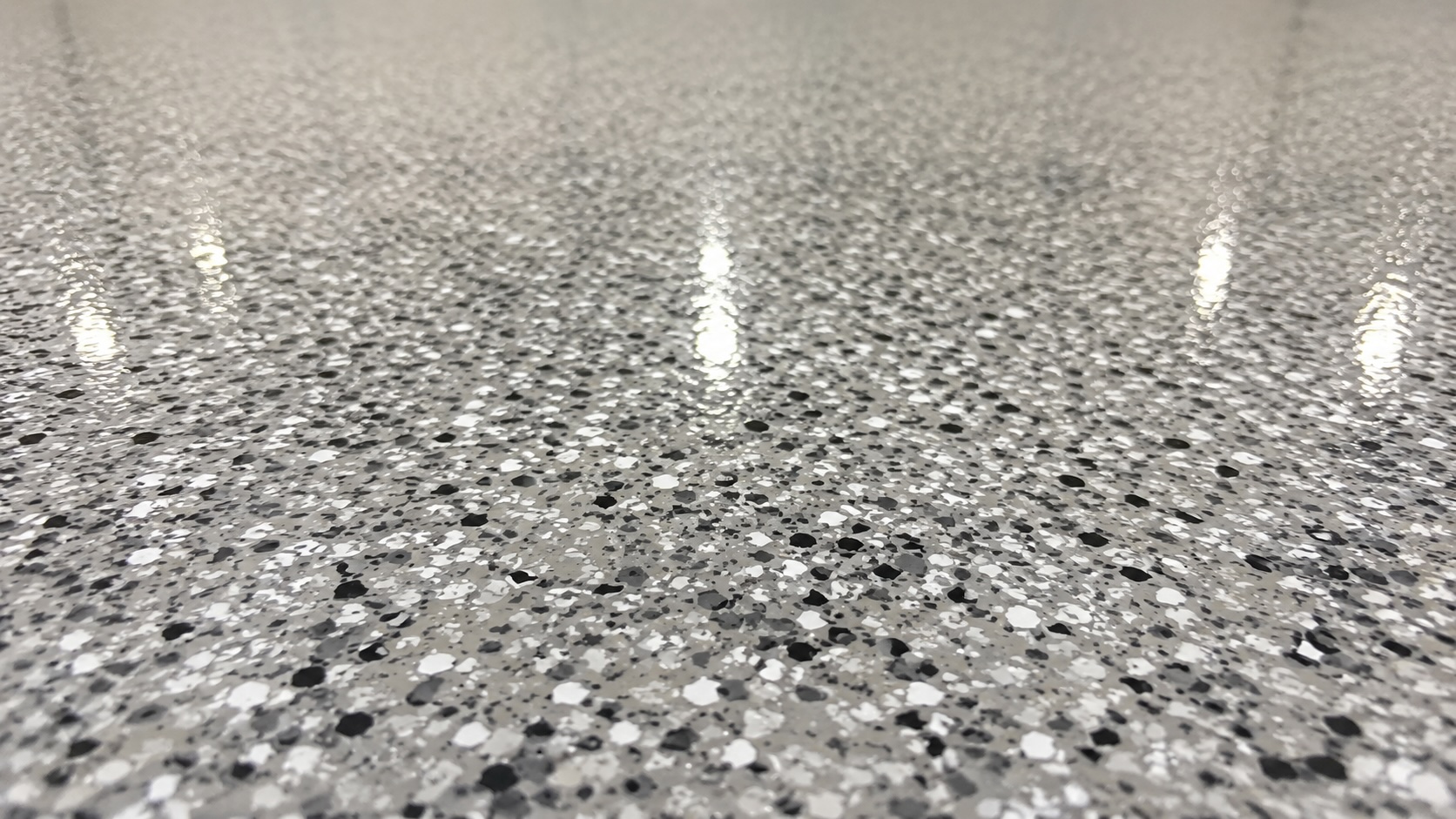
100% solids epoxy base rolled onto the prepared slab. Decorative vinyl flake chips are broadcast into the wet base coat for color, texture, and anti-slip grip.
Aliphatic polyaspartic or urethane topcoat seals the system — UV protection, chemical resistance, and your choice of gloss level. Required in Southern Utah, not optional.
Epoxy Color and Finish Options
Epoxy systems come in a wide range of finishes. Popular options for St. George garage floors include:
- Full-broadcast flake systems — the most popular choice; chip pattern in dozens of color blends, excellent at concealing red dirt and tire marks
- Solid color epoxy — clean, uniform look; shows more dust but offers a sharp modern aesthetic for organized garage spaces
- Quartz aggregate systems — colored quartz sand in the base coat; extremely durable, high-traction surface favored for workshops and heavy-use commercial spaces
- Metallic epoxy — pigmented metallic powders create a marbled showroom look; popular for upscale St. George homes in Entrada, Kayenta, and Desert Color
Ready to upgrade your St. George garage floor? Request a free estimate or call (385) 210-1565. We also cover polyaspartic coating and all concrete coating services throughout Washington County.