The Premium Garage Floor Coating for St. George's Desert Climate
Polyaspartic aliphatic polyurea is the top-tier concrete floor coating for Southern Utah — and in St. George's climate specifically, the performance gap between polyaspartic and standard epoxy is wider than in most other Utah markets. The reason is UV. Polyaspartic is an aliphatic compound, meaning it doesn't react to UV radiation anywhere in the system. The base coat and the topcoat are both UV stable. Standard epoxy relies only on its topcoat for UV protection, and when that layer degrades under St. George's intense sun, the floor beneath it deteriorates rapidly.
Five years after installation in a St. George garage, a properly applied polyaspartic floor looks essentially the same as it did on day one. No ambering, no chalking, no surface breakdown. A standard aromatic epoxy without a quality topcoat can show visible color shift within a single Southern Utah summer. Even a well-specified epoxy with a UV-stable topcoat doesn't match the full-system UV resistance that polyaspartic delivers from base to surface.
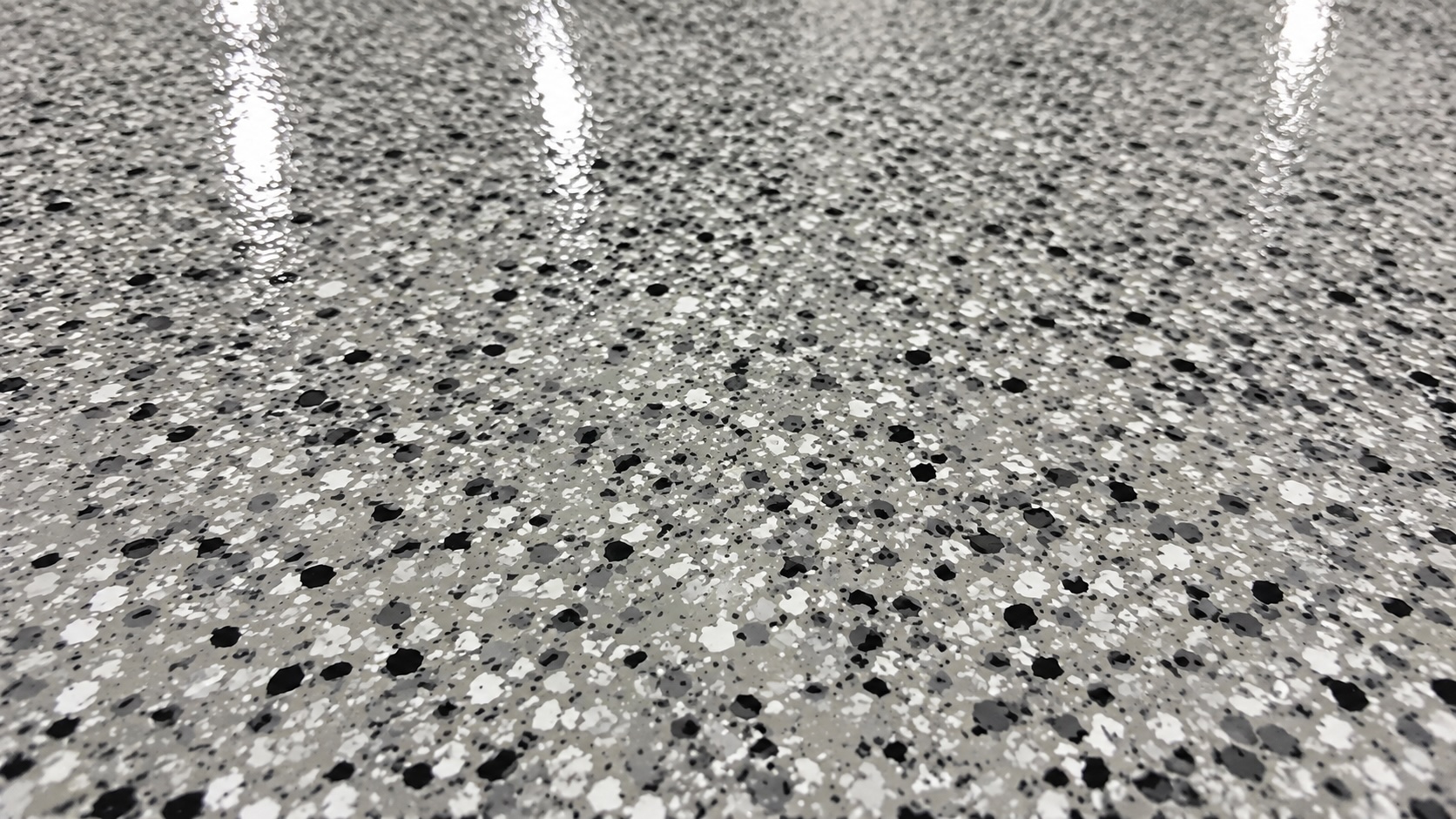
Why Polyaspartic Outperforms Epoxy in St. George's Climate
Washington County's environment creates specific demands that polyaspartic handles better than standard epoxy in four key areas:
- Full-system UV stability — The entire polyaspartic system is aliphatic — no UV reaction in any layer. In St. George's 300-plus sunny days with summer UV index readings of 10–11, this is the most meaningful performance difference over epoxy.
- Thermal flexibility — St. George garage slabs can swing 60–70°F between morning shade and afternoon sun in peak summer. Polyaspartic's chemistry is more flexible under thermal stress than epoxy, putting less strain on coating adhesion over time.
- Hardness and abrasion resistance — Approximately four times harder than standard epoxy, polyaspartic resists scratches from bike kickstands, tool drops, gym equipment, and the constant abrasion of red rock dust tracked in from desert driveways.
- Fast return-to-service — Vehicle-ready in 24 hours. No parking in the driveway in 110°F heat for two days — installed today, your car is back in the garage tomorrow morning.
Polyaspartic vs. Epoxy: Side-by-Side for St. George
| Feature | Polyaspartic | Epoxy |
|---|---|---|
| UV Stability | ✓ Full system — won't yellow | Topcoat only — base can degrade |
| Cure Time | ✓ Vehicle-ready in 24 hours | 48–72 hours for vehicle traffic |
| Surface Hardness | ✓ ~4× harder | Standard |
| Thermal Flexibility | ✓ Handles desert temp swings | More rigid, less forgiving |
| Cost | Premium (~20–30% more) | ✓ More affordable upfront |
| Expected Lifespan | ✓ 15–20 years | 10–15 years with UV topcoat |
The Polyaspartic Installation Process
Diamond grinding opens the concrete surface for a mechanical bond. Moisture vapor is tested before coating — high-desert slabs push moisture upward even when the surface looks bone dry.
Cracks and control joints are filled with flexible polyurea filler. Flexibility is critical in St. George where daily thermal expansion cycles stress all rigid repairs.
100% solids polyaspartic base applied to the prepared slab — the UV-stable structural layer that bonds to concrete and carries the decorative system above it.
Vinyl flake chips broadcast into the wet base in your chosen color pattern. Full-broadcast coverage conceals imperfections and adds anti-slip grip.
UV-stable aliphatic clear topcoat locks in the appearance. Cures to foot traffic in hours, vehicle-ready by morning — completing a single-day installation.
Comparing your options? See our St. George pricing guide for a side-by-side cost breakdown, or request a free estimate. We also install commercial epoxy flooring throughout Washington County.